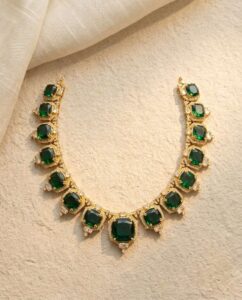



Jewellery in India has never been just about adornment—it is a reflection of culture, tradition, and identity. Among the many traditional jewellery forms, Jadau jewellery stands out as one of the most intricate and royal art forms. At Virasat Jewells, we believe that Jadau jewellery is not just an accessory; it is a piece of history that carries the essence of generations.
Origin and Heritage of Jadau Jewellery
Jadau jewellery traces its roots back to the Mughal era, when skilled artisans were patronized by royal families. The word “Jadau” itself comes from the term “jad,” which means embedding. This technique involves setting precious stones into soft gold or silver without the use of adhesives.
Rajasthan and Gujarat became the primary hubs for Jadau craftsmanship. Over time, this jewellery became a symbol of royalty and was worn by kings, queens, and aristocrats. Even today, the legacy continues, with artisans preserving the same age-old techniques.
The Craftsmanship Behind Jadau Jewellery
What makes Jadau jewellery truly unique is the craftsmanship involved. Unlike machine-made jewellery, every piece of Jadau is handcrafted with extreme precision.
The process involves multiple steps:
- Creating a base structure using gold or silver
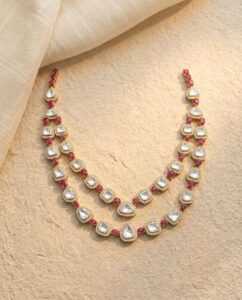
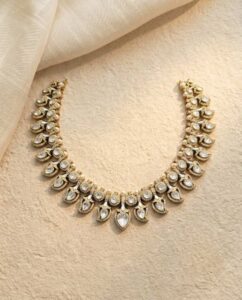
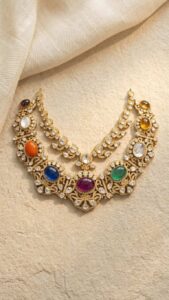
- Embedding uncut stones like Kundan, Polki, or precious gems
- Engraving intricate designs
- Polishing and finishing
Each piece can take days or even weeks to complete, depending on the complexity of the design. This level of dedication is what gives Jadau jewellery its unmatched charm.
Why Jadau Jewellery is Special
There are several reasons why Jadau jewellery continues to be highly valued:
1. Handcrafted Excellence
Every piece is unique because it is made by hand. No two designs are exactly the same.
2. Cultural Significance
Jadau jewellery is deeply rooted in Indian traditions and is often associated with weddings and festivals.
3. Durability
The stone-setting technique ensures that the jewellery remains intact for years.
4. Royal Appeal
The intricate designs and use of precious stones give Jadau jewellery a regal look.
Modern-Day Relevance of Jadau Jewellery
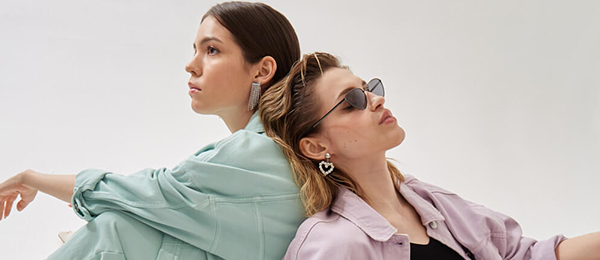
While Jadau jewellery has traditional roots, it has evolved to suit modern tastes. Today, designers are experimenting with lighter designs and contemporary styles.
At Virasat Jewells, we blend tradition with modern aesthetics to create pieces that can be worn on multiple occasions—not just weddings.
Styling Jadau Jewellery Today
- Pair a heavy Jadau necklace with a plain saree for a balanced look
- Wear Jadau earrings with western outfits for a fusion style
- Use a statement choker for festive occasions
This versatility makes Jadau jewellery a must-have in every jewellery collection.
Jadau Jewellery for Weddings
Indian weddings are incomplete without traditional jewellery, and Jadau plays a central role in bridal fashion.
Brides often choose:
- Jadau chokers
- Long layered necklaces
- Maang tikka and passa
- Heavy earrings
These pieces not only enhance the bridal look but also add a touch of heritage.
Why Choose Virasat Jewells for Jadau Jewellery
At Virasat Jewells, we take pride in continuing our ancestral legacy. Our focus is on authenticity, quality, and craftsmanship.
What Sets Us Apart
- Handcrafted designs
- Premium quality materials
- Attention to detail
- Blend of traditional and modern styles
We don’t just sell jewellery—we deliver heritage.
Care Tips for Jadau Jewellery
To maintain the beauty of your Jadau jewellery:
- Store in a dry place
- Avoid exposure to water and chemicals
- Clean gently with a soft cloth
- Keep in separate boxes to avoid scratches
Proper care ensures that your jewellery remains as beautiful as the day you bought it.
Conclusion
Jadau jewellery is more than just an ornament—it is a timeless treasure that reflects India’s rich cultural heritage. Whether you wear it for a wedding or style it for a modern look, Jadau jewellery never goes out of fashion.
At Virasat Jewells, we are committed to preserving this legacy while adapting it for today’s generation. When you choose Jadau jewellery, you are not just buying a product—you are becoming a part of a tradition that has been passed down for centuries.